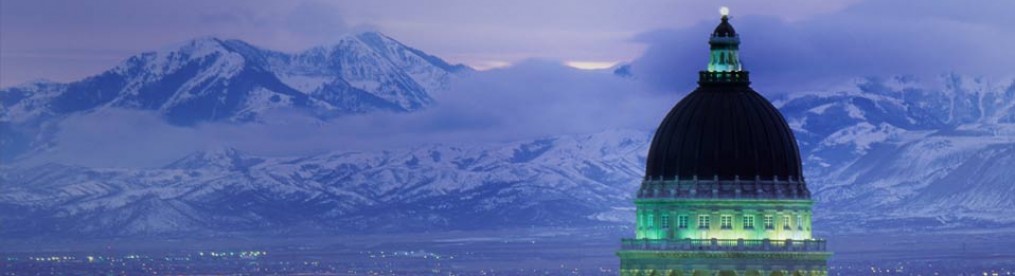
Utah’s State and Local Governments Deal with National Park Shutdowns

by Emily Bonney

Widener University Political Science Major

The government shutdown is affecting more than the vacationers’ itinerary in Utah as well as several other states hosting National Parks and Monuments. The closing of the parks is affecting the economy, shown by the five counties in Utah that declared a state of emergency for their economies.  Utah Counties threatened to bring some old western posse justice to the federal barricades to dismantle them due to the huge amounts of tourist revenue local towns missed out on during the shutdown. One mayor said their town had lost 40-60% of its business during the park closures. After engaging in discussions to reopen the parks during the shutdown, Utah Governor Herbert decided to staff it with volunteers and pay for the employees out of the State budget until the government reopened to help the communities suffering directly. Utah is paying over $1.5 million to keep them open for a week, which the article says will likely be reimbursed by Congress.

While this article is written about Utah there were several other states that were affected as well. The government shutdown, while now over, had serious repercussions and irreparable losses were made in some towns. Residents that depend on the revenues and Environmentalist groups are disappointed by what happened to the Forests, Parks, and Monuments during the crisis period because while they are a huge source of revenue they are also Wild lands that needed to be taken care of and thought of as more than money makers. Many of these parks bring in valuable resources and revenue to towns for other aspects of their government, like schooling and healthcare in the states. The Federal government did not factor these costs of living when they shut down, and now states are left to pick up the pieces.

http://www.washingtonpost.com/politics/interior-allows-almost-a-dozen-iconic-national-parks-to-reopen-with-state-funding/2013/10/11/b010aa82-3296-11e3-8627-c5d7de0a046b_story.html

Oregon Mileage Tax Bad for Tree-Huggers

by Aubrey Dangelo

Widener University Political Science Major

The government of Oregon is considering the implementation of a new policy that will eliminate its existing gas tax and replace it with a mileage tax. The new tax will no longer charge people based on how much gas they are consuming, but instead on how many miles they drive. The reason they are switching over to this new taxation method is because as cars are being more fuel-efficient, people are driving more miles per gallon of gas and are, effectually, using less gas. Thus, the government of Oregon’s gas tax is generating less tax revenue as cars are becoming more fuel-efficient.

Not having to pay to a tax on gas will eliminate one of the incentives that people have for using more fuel-efficient cars. People who drive gas-guzzlers should have to pay a higher tax to drive because they are having a negative impact on the environment, which is a problem that everyone in the state has to deal with, not just the people who drive the gas-guzzlers.  Under the new tax, anyone driving a car averaging fewer than 20 miles per gallon would pay less money under the mileage tax than the gas tax and could even get a refund. This new policy will therefore be more beneficial to people who drive gas-guzzlers than others who choose to be more environmentally responsible, which I think is a bad move for a state that has been recognized as being one of the most environmentally-friendly in the country.


Colorado Cities Fight Frackers

by Shana Kessler

Widener University Environmental Politics and Policy Student

Colorado cities are fighting frackers. Boulder, Broomfield, Fort Collins and Lafayette are giving voters the chance to declare a timeout – and in one case even ban new drilling and industry-waste disposal. Colorado has been a battle zone for hashing out the national problem of domestic energy production with an environmentally sustainable future. Interestingly enough, it is companies who are advocating for the banning or prevention of fracking – and they have cited health and environmental concerns as driving forces. People are upset that the state appears to care more about the industry than the citizens, and the local economy of many Colorado cities is dependent on the outdoor settings, clean air, and nature-made tourist attractions.

Colorado’s Oil and Gas Conservation Commission rules are complex enough, designed to facilitate drilling while protecting the environment. Yet spills occur at a rate of about one per day, and state authorities have yet to complete a human-health or environmental study of impacts. What will the state of Colorado then do? The economic benefits of drilling are huge, and Governor John Hickenlooper is a steady supporter – go figure. Lawsuits have been filed, state v. city, and little progress seems to be made.

Opponents of fracking have raised about $16,000 as they fight for votes in those four cities, and that’s not bad for a grassroots effort. But it pales in comparison to the fundraising done by the pro-fracking sector – which amounts to about $606,205, 99.7% of which came from the Colorado Oil and Gas Association. The campaign’s adviser, former Rep. B.J. Nikkel said she would love to see them beat every ballot initiative as they are bad for cities. Tell that to residents of a state where recent floods spread more than 60,000 gallons of petrochemical-laced fluids from fracking operations into yards, parks, and rivers.

http://www.denverpost.com/breakingnews/ci_24326054/colorado-oil-and-gas-association-spends-604-583

http://www.denverpost.com/environment/ci_24298280/voters-four-colorado-cities-may-call-timeout-fracking

http://grist.org/news/lawmakers-seek-answers-after-oil-gushes-during-colorado-floods/

North Dakota Government Silent on Oil Spill

by Emily Bonney

Widener University Political Science Major

On September 29th, a North Dakota Farmer discovered a large oil spill covering his lands – over 7 acres worth. The crude oil came from an underground pipeline owned by Tesoro Corporation which has the line running from a town close by to Columbus, near the Canadian border.  The issue with this is not the spill itself, but long time between being discovered and officially reported. , but the state waited almost two weeks to let the public know. Since North Dakota is becoming increasingly involved in the oil industry, the article brought to light how the state is handling problems like these that could have serious effects on both the environmental and surrounding communities.

While the spill was contained by a layer of clay underground so no water sources were affected, the article also says that no wildlife or people were harmed by this incident which I find hard to believe. The land is no longer able to be farmed for several years which will affect the farmer in various ways, and in a field of wheat where rodents are known to proliferate, having their habitat destroyed throws off the ecosystem for them and the animals depending on them as a food source. Tesoro’s company will pay for the cleanup and fix the pipe, but the question still remains as to how we are going to prevent more of these spills in the future?

It is highly concerning that the state did not think it necessary to notify the public of this event when the article also reminds us that there had been an oil spill in March one quarter of this size in which people were evacuated for their safety. Government officials are all trying to downplay the situation to make it seem as if it will be okay, but these spills are happening more frequently and there have been no significant policy changed to reflect this. We need to remember that our land is the most important resource we have, and the safety of people is more significant than the delivery of oil.


http://www.washingtonpost.com/business/nd-farmer-finds-large-oil-spill-while-out-harvesting-wheat-state-waits-12-days-to-disclose-it/2013/10/11/3dfd9256-3233-11e3-ad00-ec4c6b31cbed_story.html


http://www.youtube.com/watch?v=NwzaxUF0k18


New York Joins States in Suing EPA

by Zachary Coppick

Widener University Political Science Major

Last Tuesday New York joined a growing number of states that are suing the EPA. This law suit is over the EPA’s lack of regulation on wood burning heating systems. In 2010 all outdoor wood burners were ordered to cut emissions by 90 percent by New York’s Department of Environmental Conservation. However, the EPA has not followed suit by mandating the same change for the entire country. New York and other states are saying that the EPA’s 25 year old emission limits on wood burners are outdated and need to be revised by the federal agency.

Due to the nature of wood burning pollutants this is a large problem for New York.  Wood smoke has been linked to having pollutants that can cause asthma attacks, heart attacks, and premature death. Sounds a little harsh but that information was published by the attorney general’s office in 2008.  Also the EPA has stated that wood heaters soot contributes 13 percent to the soot pollution in the country. This would be a very good reason to have them regulated better. Since 1988 the EPA was supposed to review and revise the wood burning regulations ever eight years, but as we can see that didn’t happen. These regulations and policy were outlined in the Clean Air Act which is the state’s main point. An estimated 14,500 outdoor wood burners have been sold in New York since 2000 which is cause to have them regulated properly. The EPA has made no comment on this so far and this does not come at a surprise because due to the government shut down they are no longer working.

http://www.democratandchronicle.com/story/news/local/2013/10/09/new-york-joins-states-in-suing-epa-over-wood-boilers/2953193/

Learn Now, Pay Later! NJ’s New Approach to Higher Ed Payment?

by Marie Herb 

Rather than just talking about the many problems in society today, the State of New Jersey is trying to solve one. On the topic of higher education, many young adults are struggling to pay back enormous debts as a result of seeking higher education. New Jersey is proposing that students attending a public institution will be able to go to college for “free.” Then, for the next twenty-four years they will pay back three percent of their income to those institutions for going to school.

The proposed idea is not perfect. This system could easily be abused. After graduation, a student could intentionally not seek a job; therefore, not having to pay off their part of the debt. Also, there are problems if a student cannot find a job. Also, after graduating college some students will pay more than others. Perhaps, rather than basing payment solely on income, a total amount to repay is set, and students have to continue to pay that back based on their income. For example, a student would have to pay back $50,000 in debt. And a student out of college is making $50,000 per year. Therefore, paying back about 5% of their income per year, it would take around 20 years to pay back. In this case, every student would pay the same amount back, but would just take different times for different students based on the amount of money they were making.

Overall, this idea is something new, it has some issues that would need to be figured out, but with the state of Oregon piloting At least New Jersey is trying something new rather than the old system. Perhaps by trying something new, struggling students will be able to help get the education that they have been striving towards for so long.