Pennsylvania DEP Proposes Increase to Shale Gas Well Permit Fee

by Othniel T. Degahson, Jr.

The Commonwealth of Pennsylvania’s Department of Environmental Protection is proposing an increase in the price of a shale gas well permit from $5,000 per well to $12,500 per well. The Department of Environmental protection justifies this as a necessity to keep the state’s oil and gas oversight program from operating at a deficit, as permit fee revenue has seen a large decrease since 2014-2015. As the DEP gets a large amount of its funding from permit revenue, they have had to decrease the amount of employees in their oil and gas program.

Permit fees for shale gas wells are paid once at a well’s birth and inspection responsibilities continue until the well is plugged decades later.

The state government under Governor Tom Wolf has known that the DEP needed more money, yet they delayed on permit fee increases due to state budget negotiations that had the possibility of a severance tax on shale, which would have a portion of those funds allocated to the DEP’s oil and gas program.

Industry representatives are generally supportive of a fee increase “to provide DEP’s oil and gas program with the resources it needs” but were blind sighted by the size of the fee increase, especially given what they viewed as excessive amounts of time for the permits to become approved. Marcellus Shale Coalition data shows the average permit wait time increase from 57 days in 2016 to 111 days in 2017.
http://www.post-gazette.com/powersource/policy-powersource/2018/02/05/DEP-proposes-doubling-permit-fees-Marcellus-shale-drilling-permit-Pennsylvania-oil-gas/stories/201802050085

State Legislators and Sexual Harassment

by J. Wesley Leckrone

Jen Fifield of Stateline has done extensive research on sexual harassment in state legislatures and measures to stop it. In an article today she states

[w]hile anti-harassment training has long been standard in corporate America, that’s not the case in politics. In a sector that mostly polices itself, the lack of regular discussion about what constitutes inappropriate behavior is likely to have contributed to the long-standing misogynist culture that has allowed harassment to fester, according to many female state lawmakers, as well as psychologists who study how to best prevent sexual harassment in the workplace.

Fifield’s reporting shows that female legislators “say training alone will not stop harassment”. According to Ohio State Senator Charleta Tavares

[t]he Legislature also needs to create better procedures for reporting harassment to make it clear that women will not face retaliation or threats when they come forward, she said. ‘They are afraid of being blackballed.’

Fifield also provides a Twitter string of recent allegations of sexual harassment in state legislatures. You can find it here.

DGA Chair Confident Dems Will Win Governors Seats in 2018

by J. Wesley Leckrone

There are 36 gubernatorial elections in the United States in 2018. Currently there are only 15 Democratic governors. However, given the political environment Democrats believe they can make gains next year since Republicans will be defending 26 seats in the executive mansion.

The new chair of the Democratic Governors Association, Washington governor Jay Inslee, talked about his strategy for victory with Washington Post reporter James Hohmann. Here are some highlights from the interview:

“We need to talk about jobs,” Inslee said…. “People will figure out for themselves that they have to stand up to Donald Trump. They’re doing that without us saying a word. That’s not our communications strategy. We want to communicate about jobs and the economy. The other thing just happens organically.”

According to Hohmann the DGA will focus on a “’double-P’ strategy: The personality of the president will create the climate for a change election, and then Democrats will focus on prosecuting the case that GOP policies are hurting middle-class families.”

Inslee believes the focus should be on the second “p” since the president’s actions speak for themselves.

“No Democrat running for governor anywhere has to say, ‘Did you notice that Donald Trump has caused nothing but division, hatred and chaos?’ You don’t have to say that because he’s showing it himself. Our people are going to lead with an economic message … and we’re not going to be distracted by his divisiveness. … It’s not ideological. It’s just a rejection of chaos.”

He strongly believes gubernatorial elections will be nationalized in 2018.  Inslee argued that:

“These are referendums on the president, and you cannot escape that….You cannot minimize it. You cannot put on a different hat or a happy face. You are just tied to that smell. And that’s what they’re stuck with. There’s no soap that can erase it. … The guy [voters] wanted to drain the swamp fed the alligators instead.”

Click here for the rest of the article.

The Beneficiaries of “SALT”

by J. Wesley Leckrone

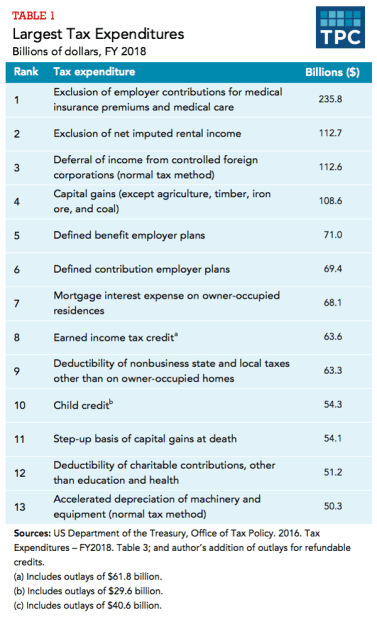
One of the more controversial reforms in the Republican plan to overhaul taxes is the demise of the state and local tax deduction (SALT). According the Congressional Budget Office the SALT will account for .5% of GDP from 2014-2023 and cost $1.098 trillion. The Tax Policy Center ranks this as the 9th largest tax expenditure for the federal government in FY2018.

Tax Expenditures

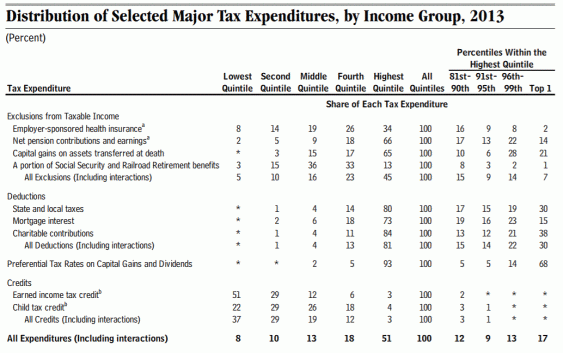
Some commentators argue that the elimination of the SALT is a way for the GOP to stick it to high-tax Democratic states. California and New York account for 32% of all the SALT deductions in 2013 and “blue” counties were at the top of the list of beneficiary according the the Tax Policy Center.

However, the SALT has also been criticized because it disproportionately benefits wealthier people who itemize their taxes. The Congressional Budget Office estimates that 80% of the SALT tax expenditure goes to the top quintile of earners and 30% to the top 1%.

distribution of SALT


GOP Challenges to PA Gov Wolf’s Reelection Now at Four

Mike Turzai, the Speaker of Pennsylvania’s House, is the fourth candidate to announce a run for the GOP gubernatorial nomination next spring. He joins Scott Wagner, Paul Mango and Laura Ellsworth in the race for the opportunity to unseat Democratic Governor Tom Wolf in November 2018.

Delco, Donald Trump & the 2017 Elections

by J. Wesley Leckrone

Delaware County (PA) Democrats had a good day at the polls on Tuesday November 7. They captured seats on the county board and a number of row offices. There are a number of explanations in this article from the Delaware County Times.  Here is some commentary related to how I interpret the results:

“I think one thing that’s really important to keep in mind here is that suburbs in general and Philadelphia suburbs, including Delaware County, have been trending Democratic anyway,” he said. “This is not the beginning of a trend. This is a trend in a sense that has been going on for more than a decade. Basically what Trump did was to accentuate and accelerate the Democrats against the Republicans.”

What occurred Tuesday, Leckrone said, was a long-term process coming to fruit.

“This is probably the beginning of a long term change that’s been following the voter registration,” Leckrone added. “I think a lot of it has to do with cultural and social values that people have … It’s almost as if geography determines the way people vote nowadays.”

On a cultural basis, Republicans tend to fare more conservatively with values centered on religion, marriage and guns while Democrats, a substantial number of whom live in metropolitan areas, are more cosmopolitan and less tied to these issues, but of course, he said, Republicans can be found in cities and Democrats can be found in rural areas.

Yet, Leckrone warned Republicans still have traction, adding that even in this environment, Delaware County’s election results were relatively close.

“If you take a look at the numbers – county council, it’s only 2,000 votes,” Leckrone said, adding that the Libertarian candidate received 2,040 votes. “I think you still have remnants of people voting Republican.”

Leckrone said this election showed that Democrats do come out to vote.

“I think for the Democrats, it’s a good sign that they were able to get their voters out,” he said. “It’s one thing to have a voter registration edge, it’s another thing to get them out.”

“If they can continue to turn people out and they can tap into anger against the Republicans, they could potentially have a shot at next year,” he added, although he said that will be tough because of the way the district is drawn.

However, if voters retain a large feeling of angst, that could translate at the polls.

“People are more motivated by what they oppose,” Leckrone said. “That could be a big driving factor next year.”